Chop A Forest: How to Get Coins and Make Every Run Pay More
How to earn coins in Chop A Forest: chop trees, collect and sell logs, then reinvest in capacity, speed and rarer wood so every run pays more.
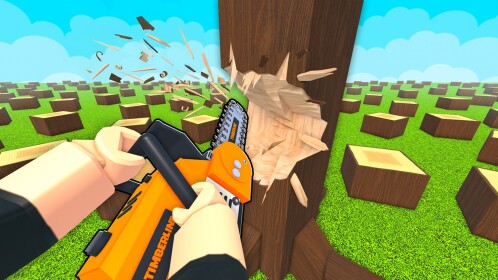
Coins in Chop A Forest come from selling logs — the game's own description spells out that loop: break trees to collect logs, sell the logs to earn Coins, use the coins to buy tools, upgrade your tools, and work toward the best classes and gear. You chop a tree, pick up the logs it drops, carry them over, sell them, and spend the coins on whatever makes the next loop faster — and every run repeats it.
So the useful question isn't just what pays. It's how to make each trip to the sell point worth more, and three things decide that: how much you can carry, how fast you can cut and collect, and how good the wood in your load is.
The earning loop
- Chop a tree. You start with your bare fists, and punching works — it's just slow. How to chop trees covers the cutting side.
- Collect the logs it drops.
- Sell them at the sell point. That's the payout: coins for everything you brought. The exact selling steps live on the log-selling page.
- Reinvest, then repeat. Put the coins into a tool or upgrade and head straight back for the next tree. Players describe exactly that rhythm — sell, buy, go back, keep repeating.
Early numbers are small, and that's normal. In real runs, new players spent about 60 on an early upgrade, then saved up 150 for the first axe, which cut noticeably faster than punching. Prices can change with updates, so take those as session figures, not a fixed price list.
Carry more so every trip pays more
By hand you can only move a few logs at a time — one player hit a wall at about five pieces. Coins spent on capacity mean fewer round trips for the same forest:
- A backpack raised carry space to 10 items, with the next tiers costing 175 and then 750 in that session.
- A car (500) let a player load up and sell everything at once.
- A truck from the garage hauled 50 wood to the sell spot for one bulk unload.
Capacity doesn't raise a log's price — it raises how many logs each trip delivers, which adds up the same way.
Cut and collect faster
Tools and the Tab upgrade menu don't change what pays — selling logs does — but they change how much wood each loop gathers:
- Damage and sharpness raise the damage each hit does; the first upgrade visibly made even fists "give more damage to the tree."
- Speed — after one speed upgrade, a player could collect wood just by holding E. The menu also improves grasp and walk speed.
- Bigger tools scale the cutting up: the first axe (150) beat fists outright, a bomb (2,500) took out about three trees at once, and in one session a 5-minute chainsaw trial and a vacuum each made harvesting and collecting much faster.
The shops stock far more than this short list — how to get tools, tool progression and tool upgrades cover the full picture.
Sell better wood when it shows up
Logs aren't all worth the same. Players ran into wood rarity during normal play — white wood was described as "actually more expensive" — and special trees appear in the forest, like a candy tree and a rainbow timber; one session watched a rainbow timber sale tick up to 29 mid-count. Treat special trees as a bonus stop: filling your carry limit with rarer wood should beat a load of ordinary logs.
Zones unlock in order
You can't skip to the far end of the map. Players who tried to move ahead were gated by biome — "we have to go in order," "we have to finish this one first" — and felling the last trees of a stage unlocked the next one. The game's listing describes working through 5 forest zones starting from a simple axe. For earning, that means your harvesting grounds grow as you clear them; how to clear the forest follows that progression.
What the loop grows into
Stick with it and the curve shows. The early game is punching trees to afford a 150 axe; later, with upgraded gear and vehicles, one session had over ten thousand banked with money "just flowing in" on sell runs. Those are single-session numbers, not rates — but they show what the reinvesting is for: coins spent on capacity, speed or better tools mean more wood per loop, and more wood per loop means a bigger sale.
Progress carries over between sessions too — the game notes that solo and friend runs save, so a run picks up where it left off instead of resetting. And before you settle into a long chopping session, it's worth a quick check of the codes page.
In short
- Earn: chop, collect, sell, reinvest — that loop is the core of the coin economy.
- Capacity (backpack, car, truck) makes each trip worth more.
- Tools and Tab upgrades make each minute gather more wood.
- Rarer wood sold for more when players found it — white wood was described as "actually more expensive" — so it is worth grabbing when it shows up.
- Clear zones in order to open up more forest to harvest.
Related Guides
How to Sell Logs for Coins
Find the sell spot, deliver your logs on foot or by car, and confirm your Coins arrived.
Tool Upgrades: Tab Menu and Costs
Open the Tab upgrade menu, buy each upgrade line with Coins, and see what every stat improves.
How to Get Gems
Claim Gems from the one-time social reward and the repeatable daily panel, plus what Robux packs offer.
Best Tools: What to Buy Next
Decide what to buy next with your Coins: the 150-Coin axe, the saw's zone gate, or 2,500-Coin dynamite.